GreenLens
Ensuring users can hike care free
Role
UX/UI Designer
Tools
Figma
Notion
Procreate
Adobe Premire
Methods
User Testing
Wireframing
User Research
Prototyping
Timeline
Nov2025 - Dec2025
Overview
The Hiking Experience
1
Awareness
How can we ensure users are aware of the surrounding flora?
2
Safety
How can the users safety be upheld, to ensure they feel protected?
3
Educate
How can we educate users during and before they reach a trail about the poisonous plants?
The
Solution
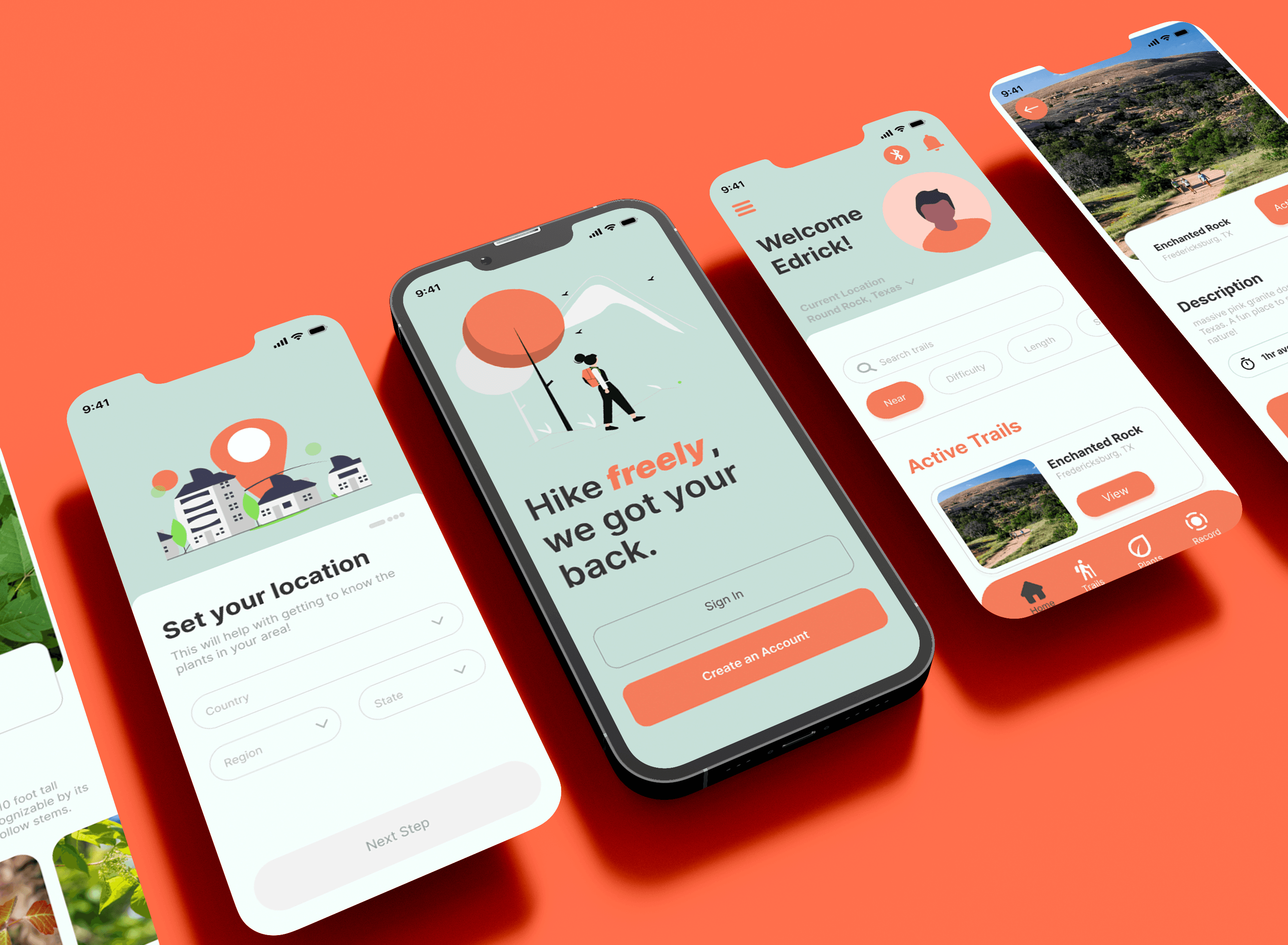
Focusing on these issues, I created GreenLens, an app paired with meta glasses that alerts users to dangerous flora around them, while also educating them about the plants properties.
1
Unaware
Users were not aware the touched or interacted with a poisonous plant.
2
Uneducated
Users actively interacted with plant not knowing it was poisonous.
Adults ranging from 18-50 years of age, mostly those hiking or even those studying plants.
Those with pets, primarily cats
and dogs.
Those who are outdoorsie or are often found outside working.
Current Competitors
1
Information
How did they handle educating the users of plants?
2
Dangers
How are the more dangerous flora handled? Are their systems in place to alert or inform the user?
3
Scanning
How is scanning plants handle in app? Accuracy?
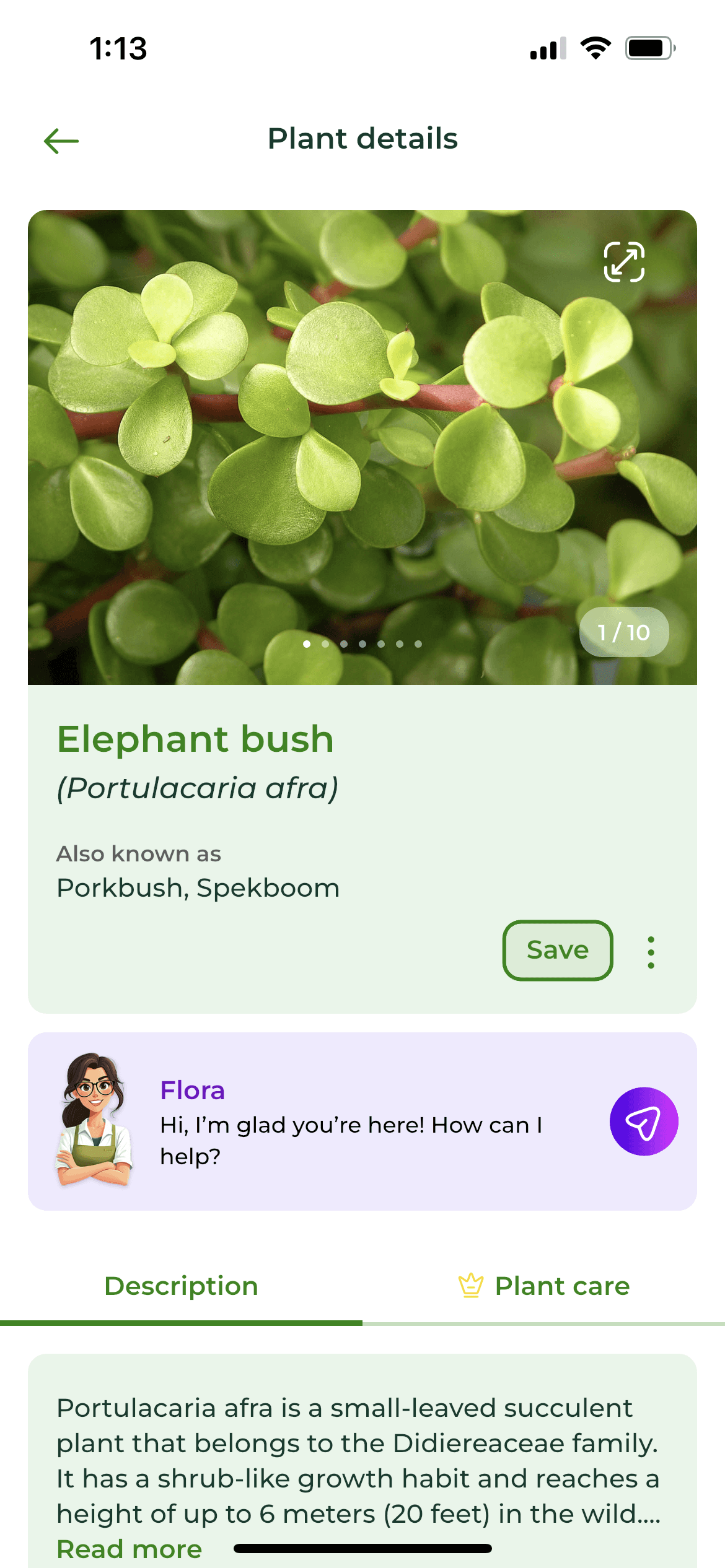
PictureThis AI
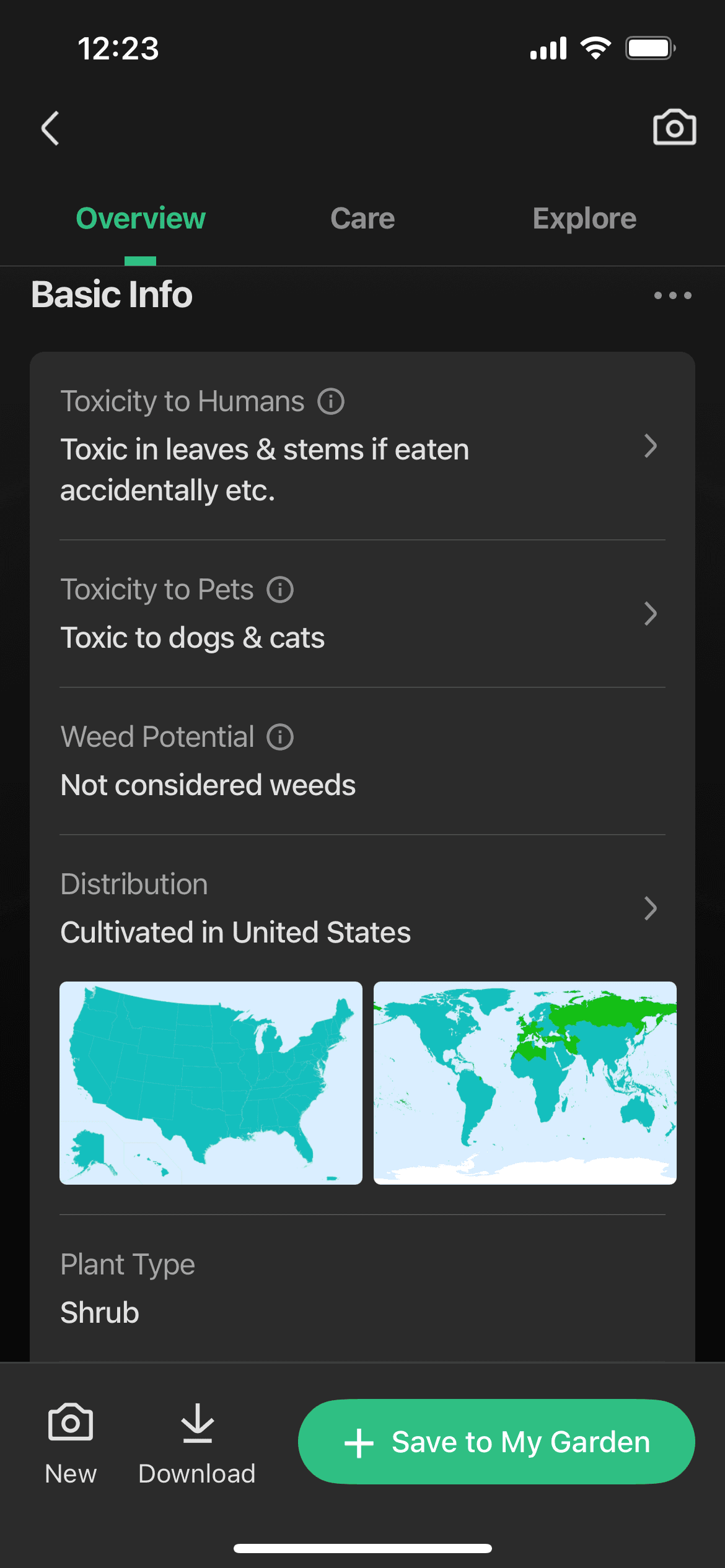
Pain Points
Wrong Info
App naming plants wrong and giving wrong descriptions.
Pay Wall
Subscription costs are too high, blocking features like better scanning.
Lack of Action
Mentions the toxicity of plants but no option to remedy it.
Thoughts
The app involves the toxicity of a plant, how its toxic, and to who but doesn’t mention what steps or precautions to take if you come into contact with one. May need to add trails tab so users can see what plants relate to what trail overall.
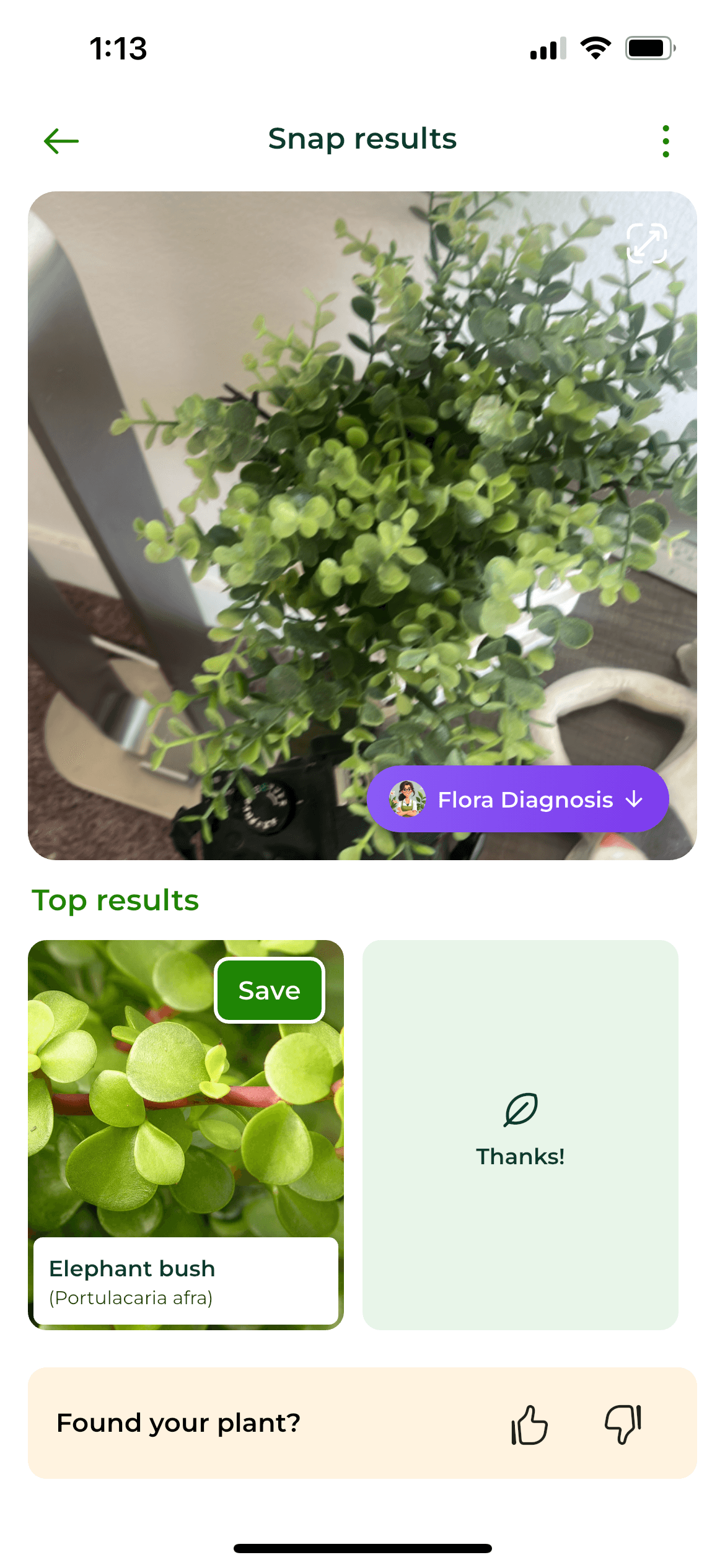
Seek iNaturalist
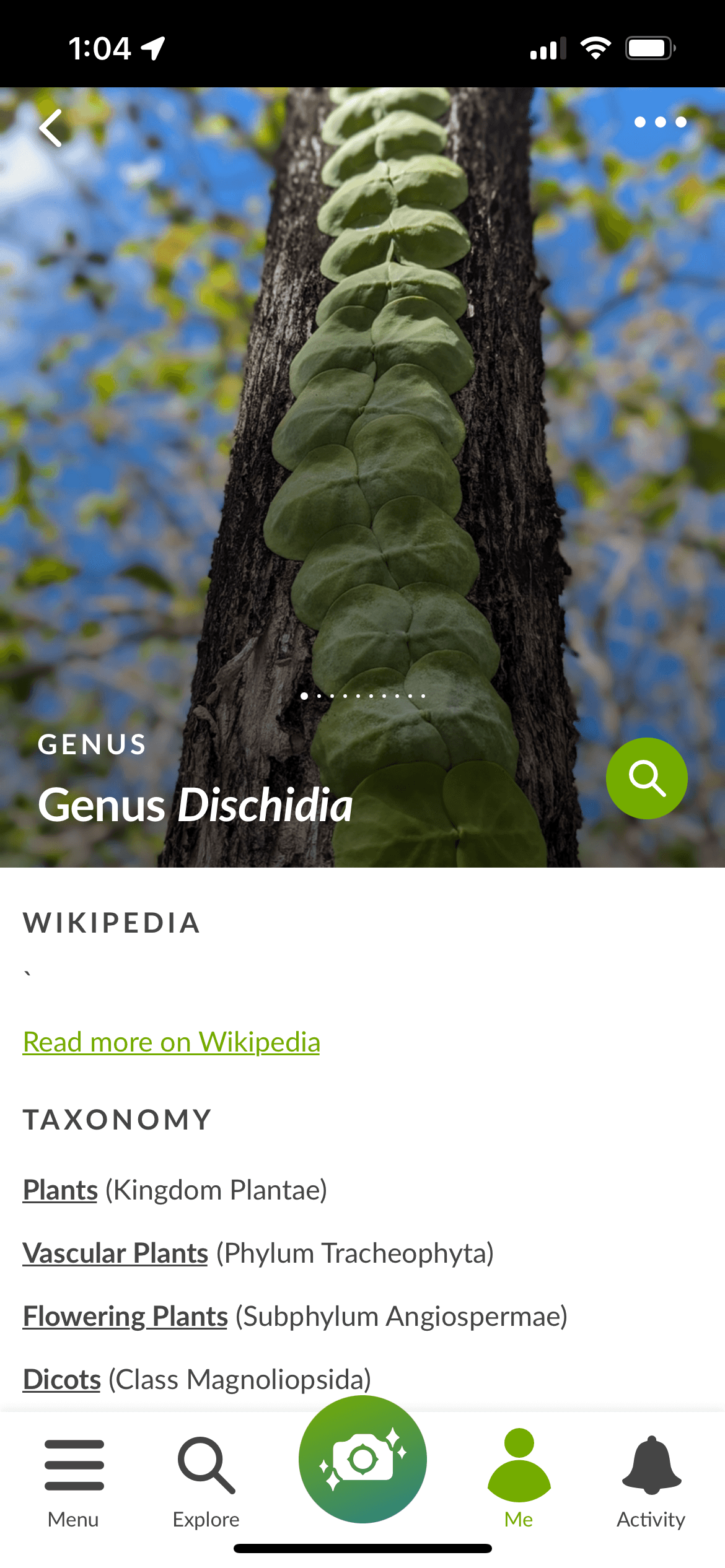
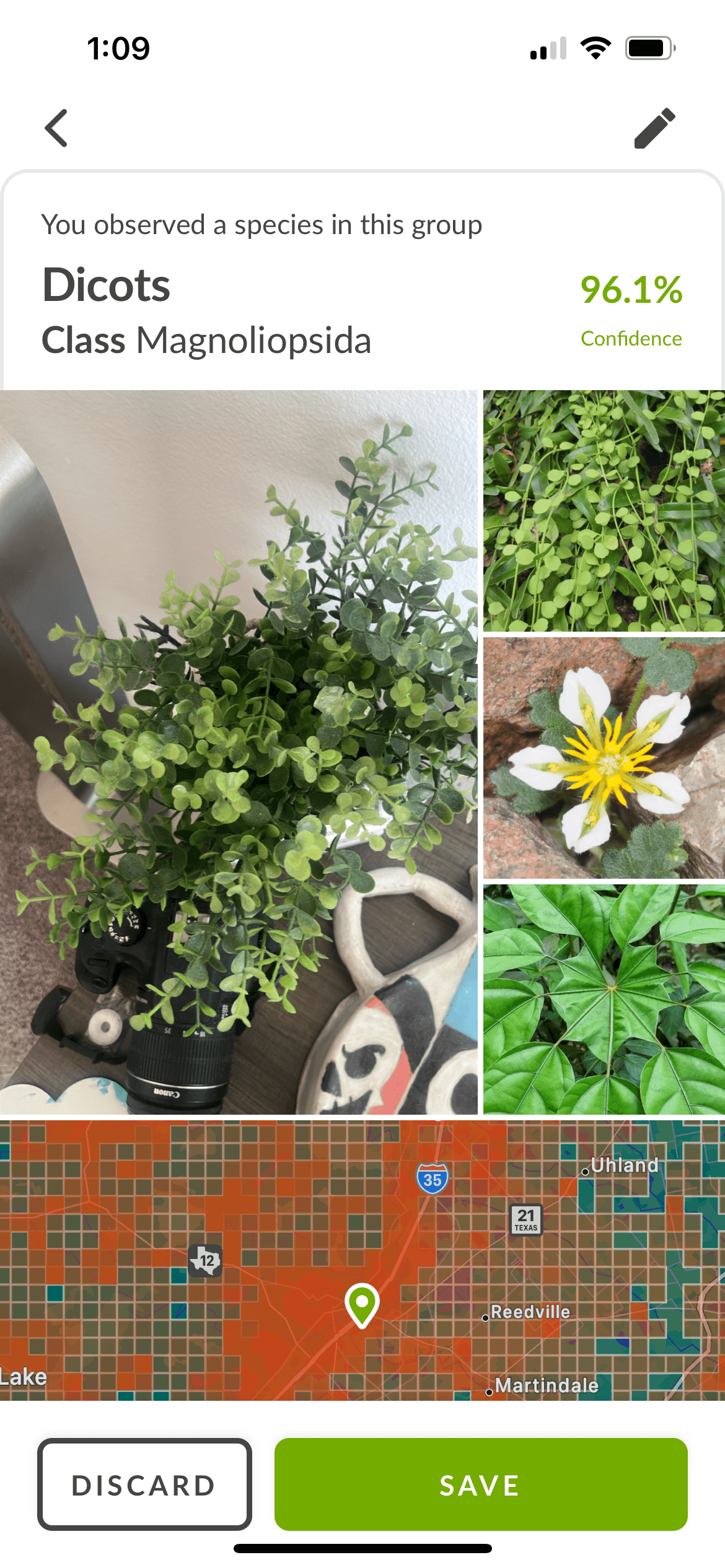
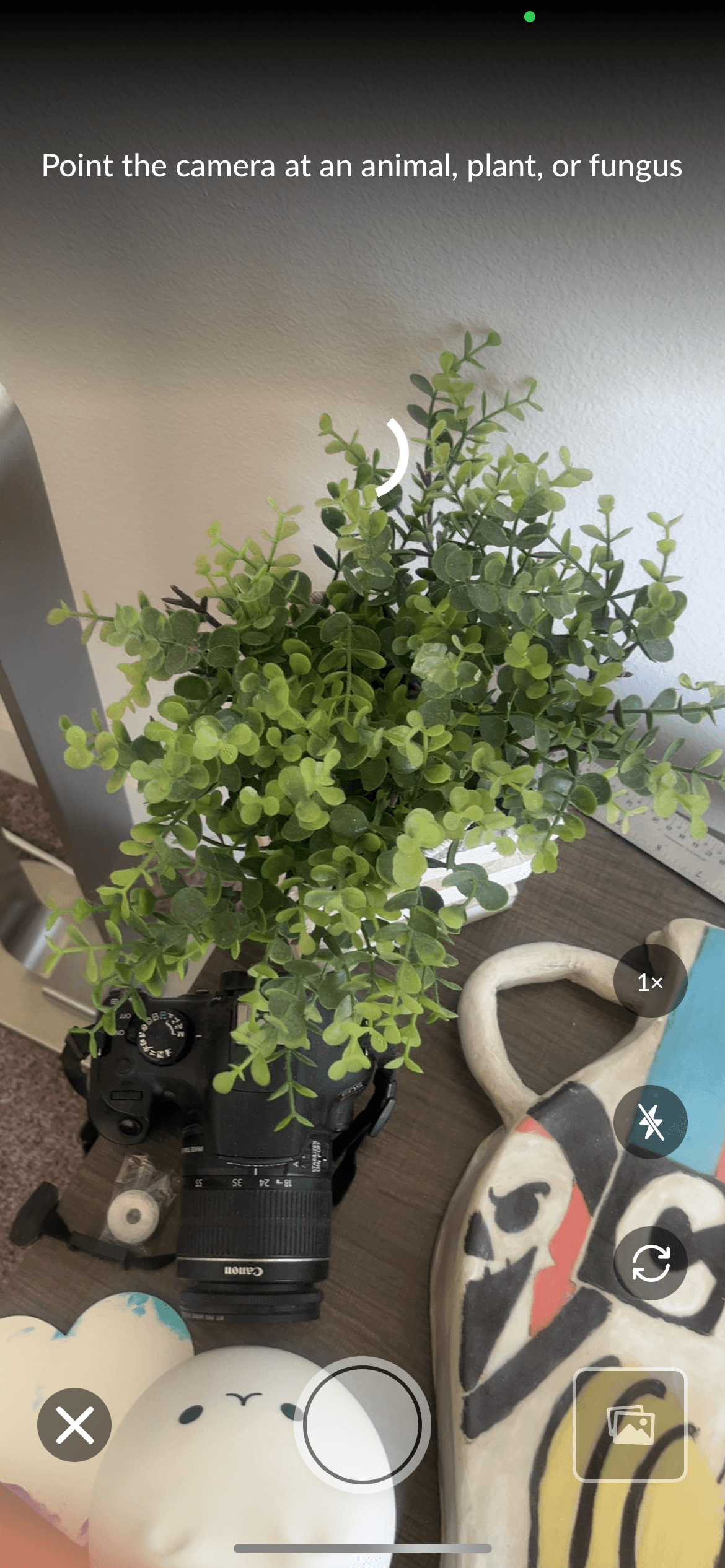
Pain Points
Wrong Info
Misinformation, such as plants being labeled incorrectly and plants being assigned the wrong bio.
incorrect Scanning
App scans objects and not plants sometimes.
Slow Scan Time
Slow speeds, loading images take a
long time.
Thoughts
They mention if plants are poisonous, but isn't immediately upfront about it into the end. There is a large amount of text for the users to read about the plant, but not much direction of what information is important.
PlantSnap
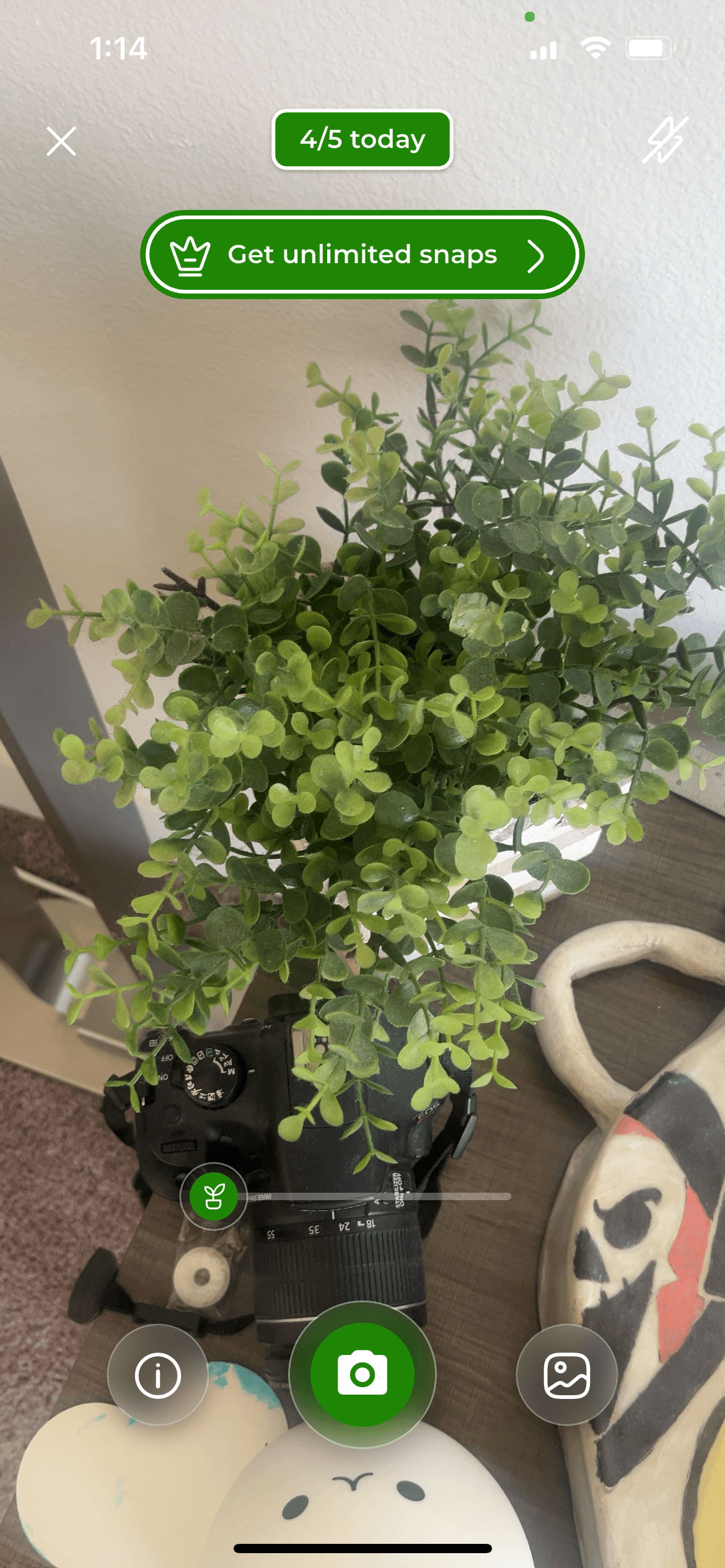
Pain Points
Unreliable Scanning
Scan being unreliable, misidentifying plants.
Sensitive Scanning
Photo sensitivity, needing absolute clear lighting to identify plants.
Incorrect Info
Incorrect id of plants.
Thoughts
The app involves the toxicity of a plant, how its toxic, and to who but doesn’t mention what steps or precautions to take if you come into contact with one. May need to add trails tab so users can see what plants relate to what trail overall.
1
Incorrect ID
Inconsistencies with the app displaying the wrong plant.
2
Hidden Info
Toxicity of plants being either non-existent or hard to find.
3
Info Overload
Too much information being displayed, hard to scan through.
Tackling Interviews
1
Plant Encounters
Did the user ever encounter poisonous plants? How did they deal with it?
2
Education
How did they go about learning about the flora in their area?
3
Smart Glasses
How would they feel with implementing smart glasses on their hikes?
4
Trail Finder
Would users enjoy being able to find trails and read about them on the app as well?
Interview Findings
After interviewing 10 participants, the results showed that:
80%
40%
Were unable to identify poisonous plants in their region or only knew of one.
70%
Of interviewees mentioned coming into contact with poisonous flora and did not know what to do in the moment.
30%
Of interviewees use plant scanning apps, but more so to take care of their own plants than watch out for them.
90%
Of interviewees wanted glasses to keep them safe while hiking.
80%
Of interviewees would rather be able to find a trail and learn about it in the app then separate from it.
"I'm not ALWAYS going to be paying attention to where I'm walking and it's annoying realizing an hour later you've touched poison ivy…I just want to have fun with my friends!"
"I wasn't originally from Texas nor was I ever told about any posionous plants so I had no idea the tree I was leaning against had poison ivy on it…"
"I have apps I use to scan plants, mostly to take care of though. Having to scan plants actively on a trail would be too annoying to do for me…"
1
Alerts
A way for users to be alerted of plants on trails they're actively walking.
2
Education
Educating and informing users of plants that are on trails they choose.
3
Trail Finding
Adding in a trail finding feature so users don't have to go elsewhere to look for them.
DEFINE
Personas
Once feedback and interviewing sessions were done, I took the information and created one persona to represent the group that would benefit from having an app that alerts, informs, and helps guide users when hiking.
Jessica Jones

Age: 26
Family: Single
Occupation: Barista
Gender: Female
Located: Austin, TX
Education: Bachelors
Bio
Jessica is currently a barista that focuses on connecting with others and exploring nature as much as she can. They enjoy hiking and sharing trails with friends as well as painting the nature scenery.
Goals
Go into the illustration field
Connect with locals
Work on giving back to those in need
Explore nature in every continent
Frustrations
Takes too much time to read about dangerous flora
Lack of info about the trails she'd hike
Having to be careful 24/7 if going off beaten path
Personality
Extroverted
Curious
Energetic
Joyful
Quote
"If there was a way to make it so I didn't have to pay attention to dangerous flora and someone did it for me, I'd be over-joyed."
In App Suggestions:
Way to be alerted of dangerous flora on path.
Warn users of a dangerous plant close to them ?
Glasses can start beeping out loud.
Glasses vibrate when close to a plant.
Both glasses and phone vibrate to alert users of danger near them.
Alert them of what dangerous plants are on the trail beforehand?
As users get close, the phone vibrates on and off constantly till addressed to show upcoming plants on trail.
A ding or sound plays from the phone, alerting them.
Take into account users own disorders (like sensitivity to specific plants)
Have users list health issues when creating an account.
Relay conditions and environmental factors to user that may harm them.
Visual aid on different trails that communicate to users trails that may affect them more than others.
Inform users of poisonous plants on trails when looking?
Visual aids that may be present on different trails with poisonous plants.
Ensuring that the poisonous plants are present on the trail information screen.
Protect users or guide them when they come into contact with dangerous flora?
Ensuring information for remedies is available for each poisonous plant.
Ensuring the Poison Control number is present.
Ensuring quick and easy access to solutions on how to care for wound.
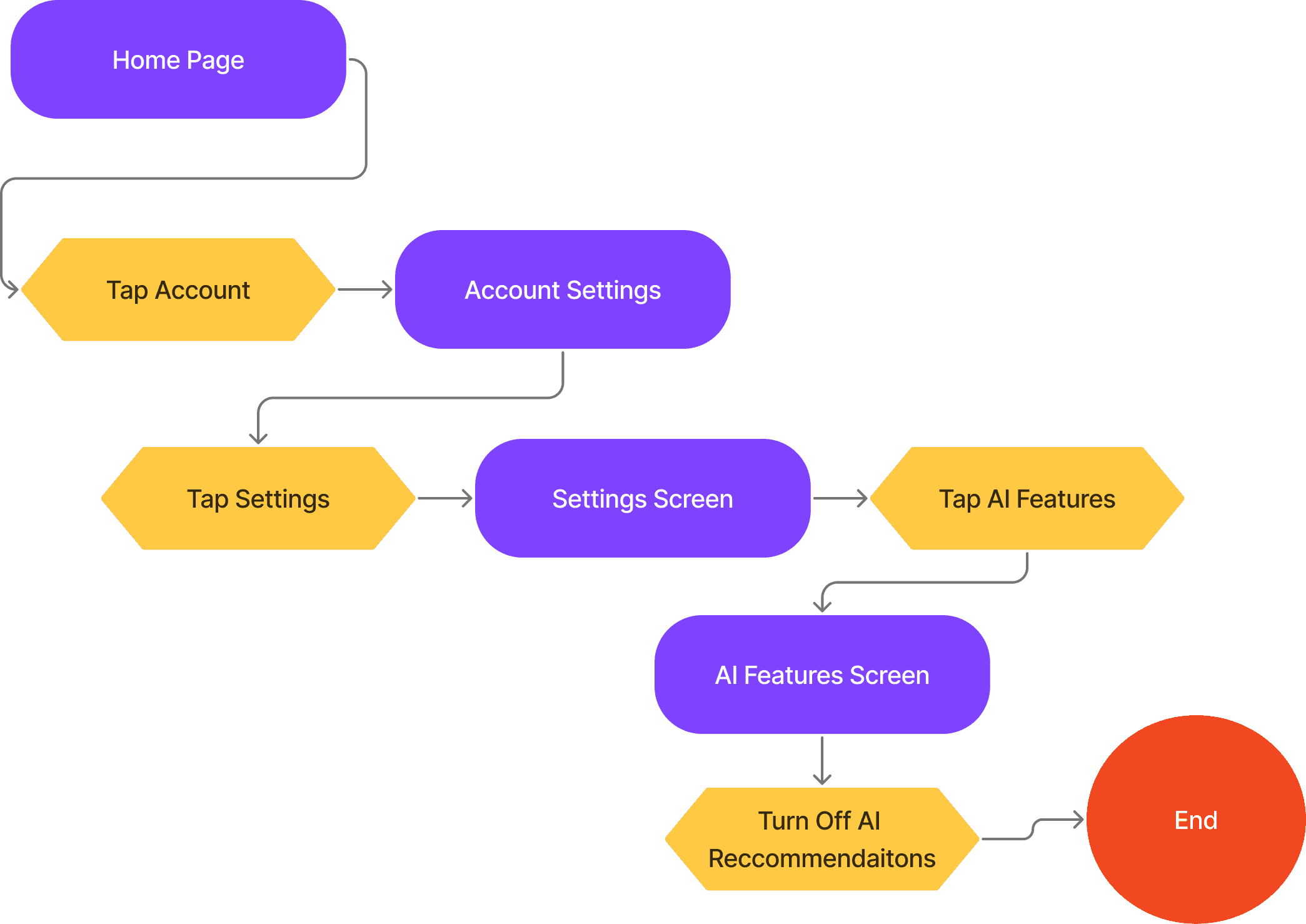
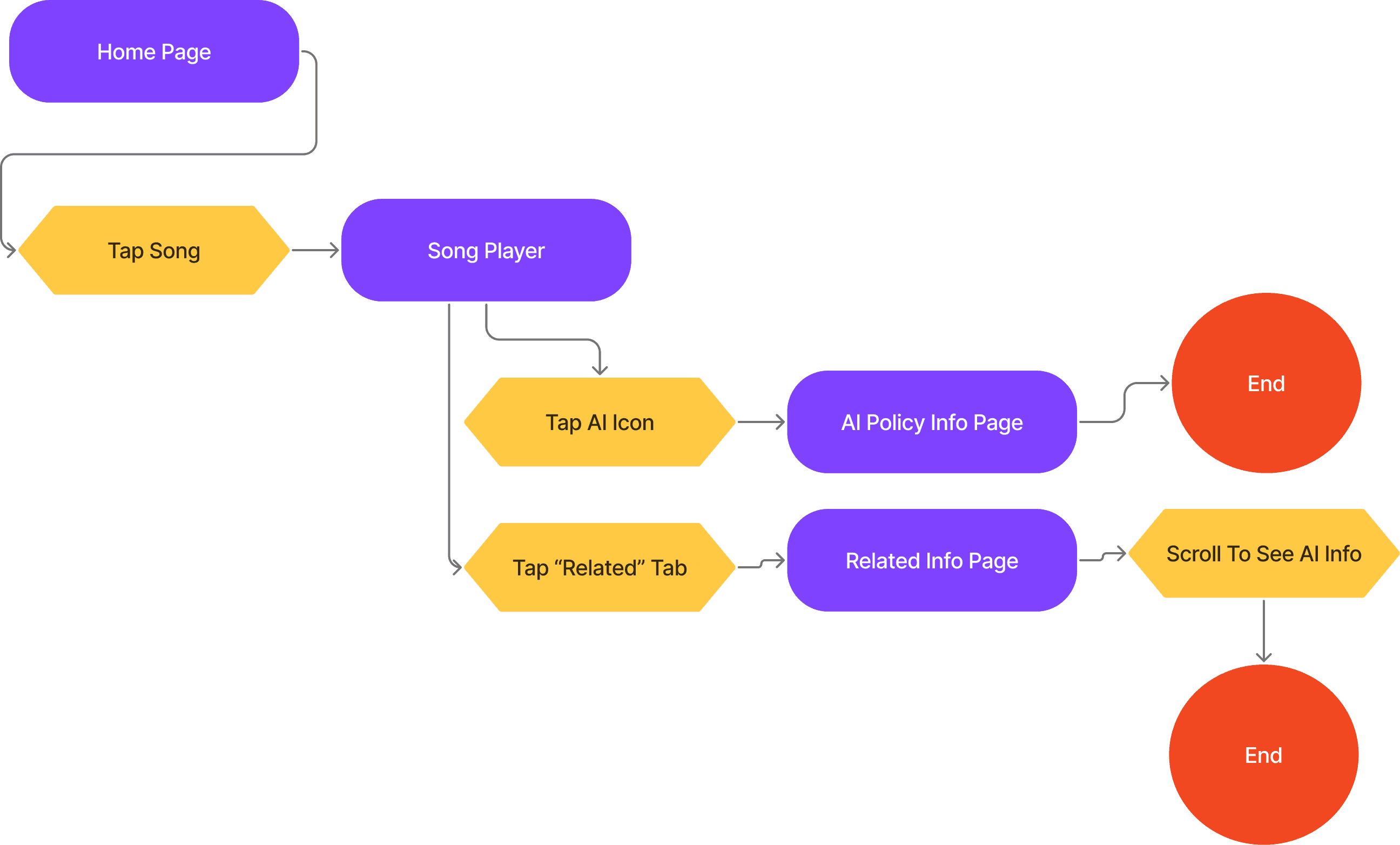
User Flow
ITERATE
User Testing Phase
Home Page

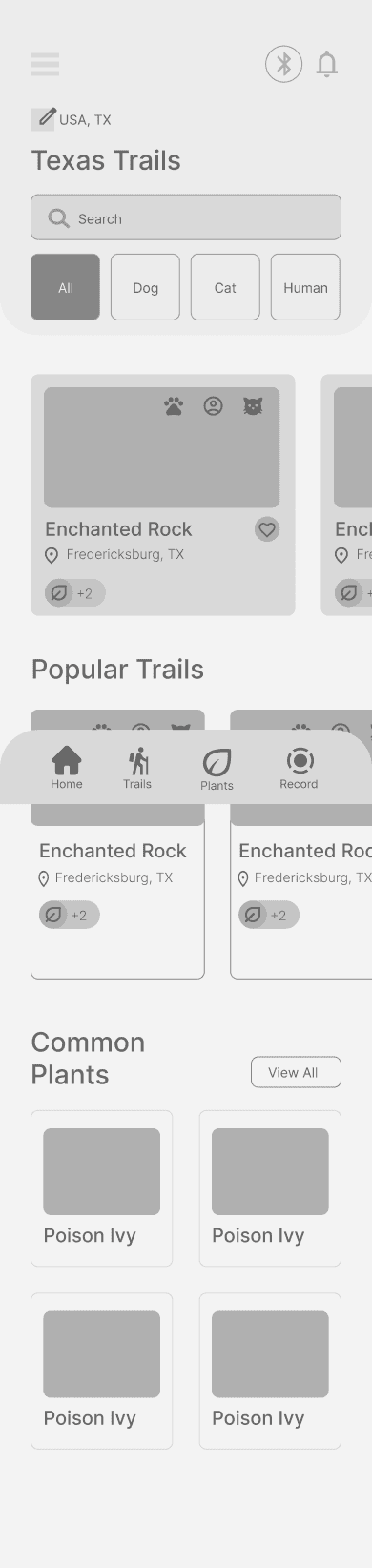
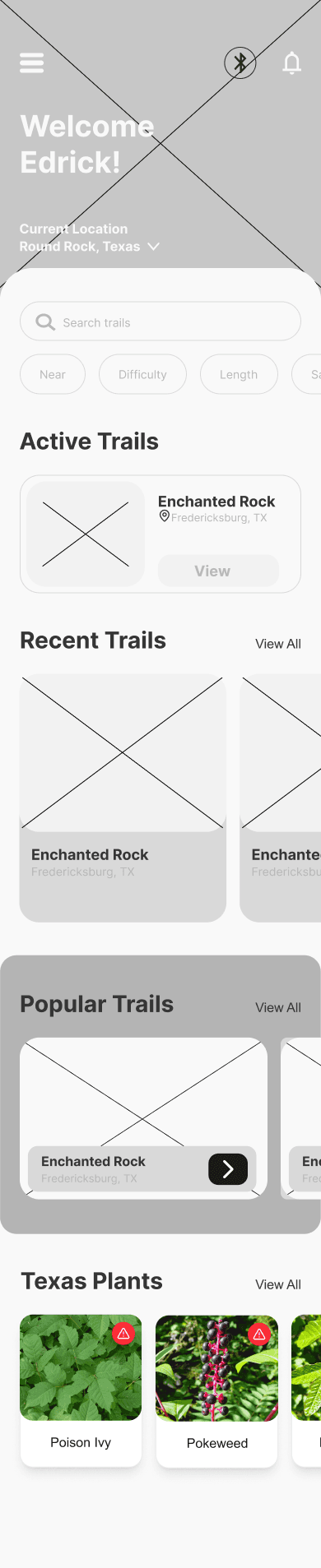
Plant Information
Alerts
Lets do a quick recap of how we got here:
01. The Goal
Ensuring users can enjoy their hikes and nature walks free from worry.
01. The Goal
Users annoyed at having to be aware of dangerous plants, a lack of education about said plants, and no easy way to quickly identify seamlessly.
01. Solution
An app that pairs with smart glasses that helps alert users of nearby dangerous flora, while the app helps educate and guide them about plant life and remedies for afflictions.
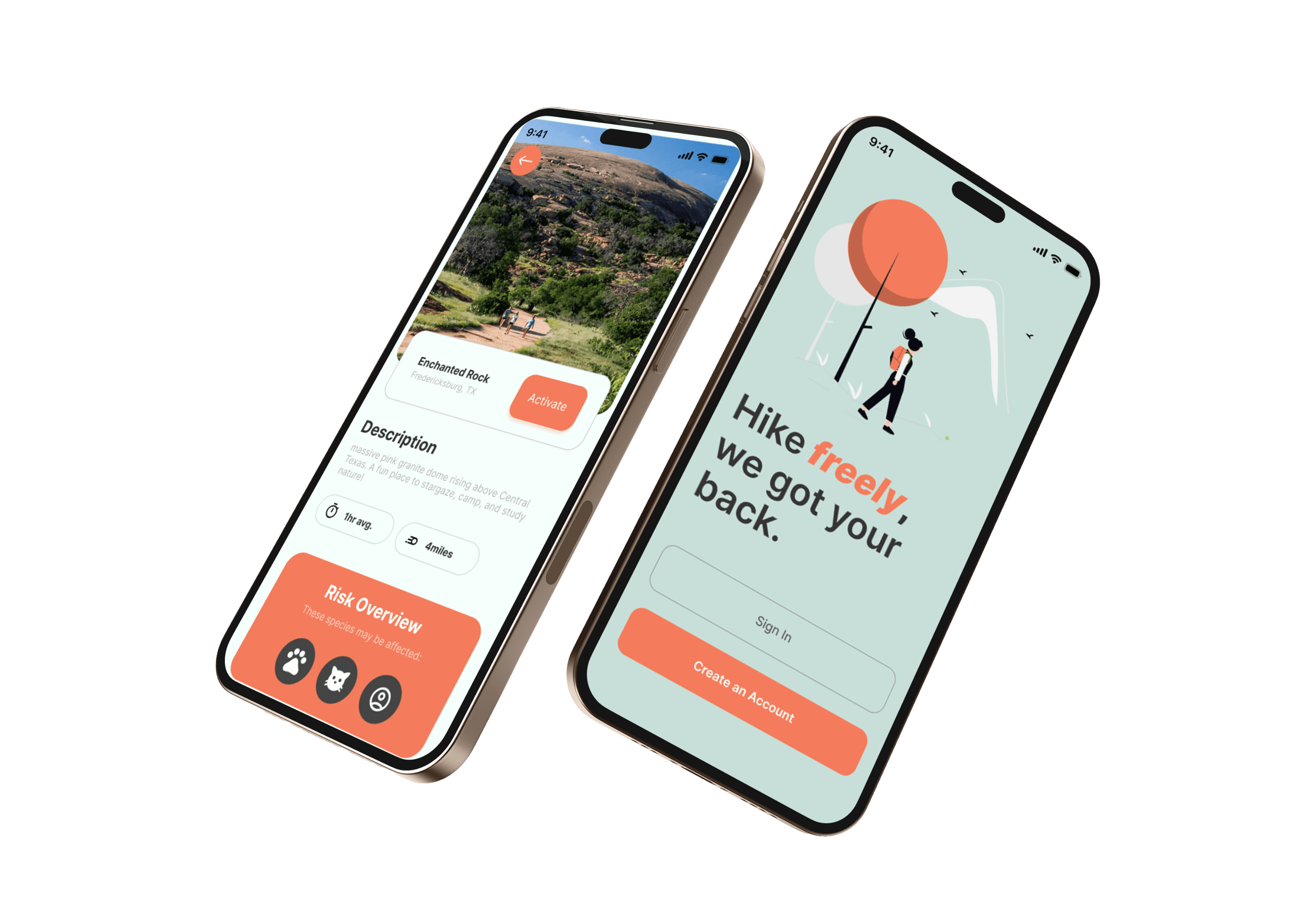
Sign In Process
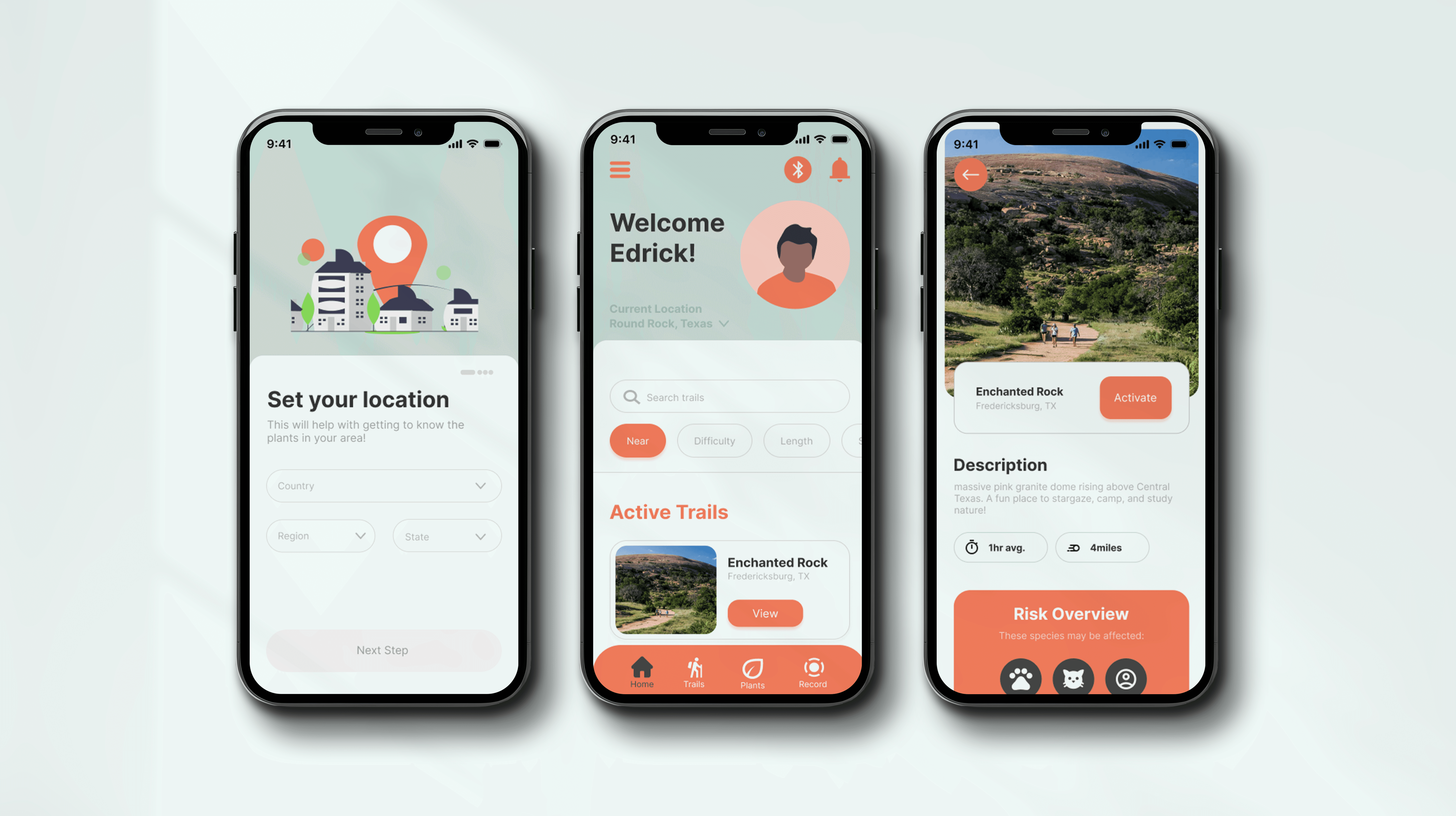
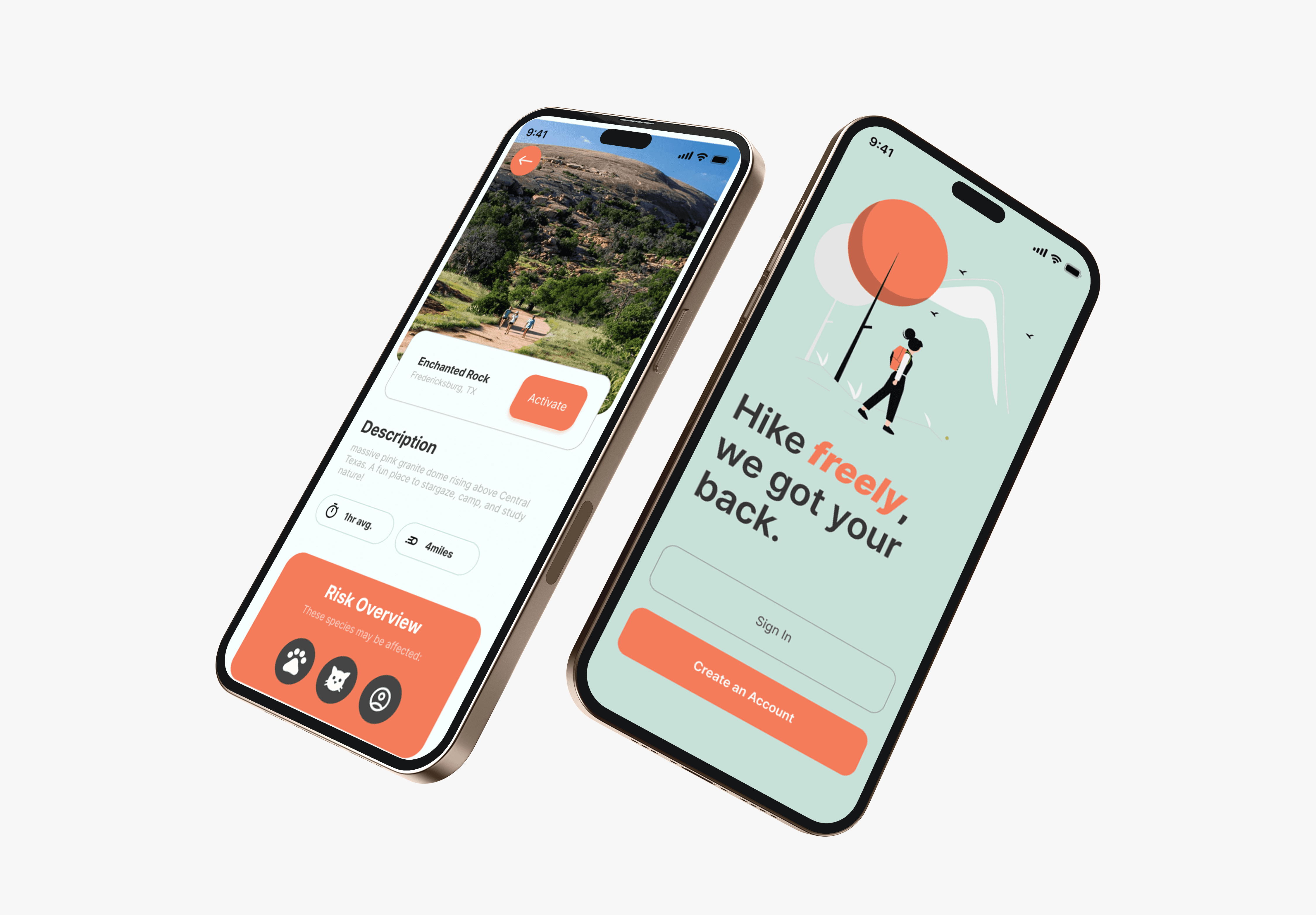
When users sign up, the focus is to gather the users location to know what region their in and provide the correct plants, and also making sure the user is introduced to what the app provides for them.
Activating Trail
Users are able to browse different trails using different filters and adding them to "Active Trails" to start recording their surroundings.
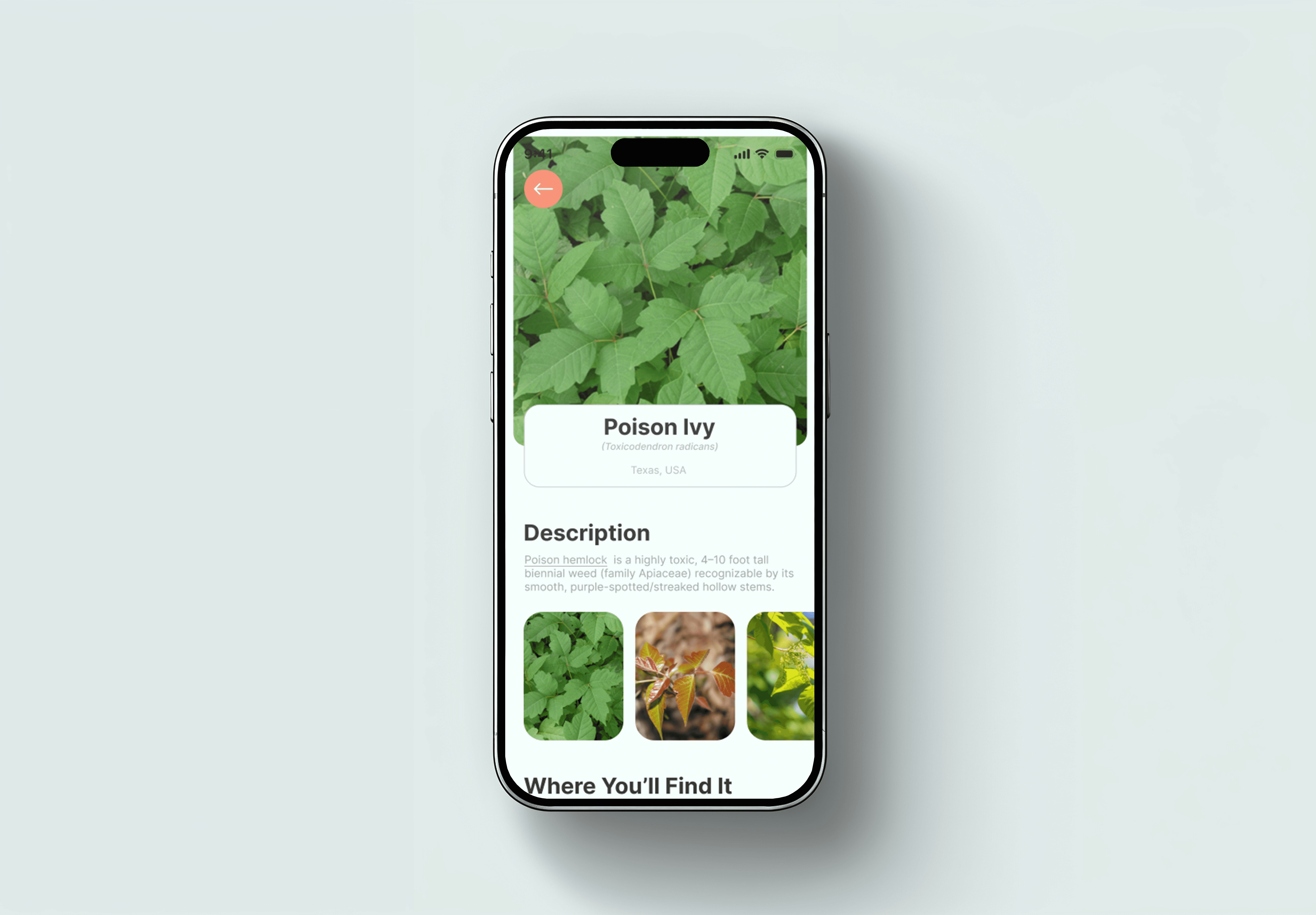
Exploring Plants
Users can search and browse different poisonous plants in their region to educate and prepare themselves for future trails.
Recording
Users will be able to start recording once selecting a trail, from there they can receive alerts and additional information about their selected trail.
Reflections and Next Steps
This project was really interesting and challenging to work on. As someone who never really encountered these issues, it was nice putting myself out their and in others shoes to understand their pain points and struggles so that I may better their own experiences and adventures through nature.
However, in the near future, there are certain features and additions I want to make to the app to bring it more to life, but also follow the system that previous apps and other platforms have setup to ensure there isn't any user confusion, such as:
1
Improving the clarity of the "Record" screen to be more up to date with how current play/pause systems look like.
2
Adding in a manual scanning feature to also give users an option to take a picture if they so choose.
3
Creating a better intuitive search for trails, such as adding a map or options to input a specific location, etc.
4
Giving additional information about trails, they have their own webpages, so giving additional links for them to look into as well.
Check out my Other Works!